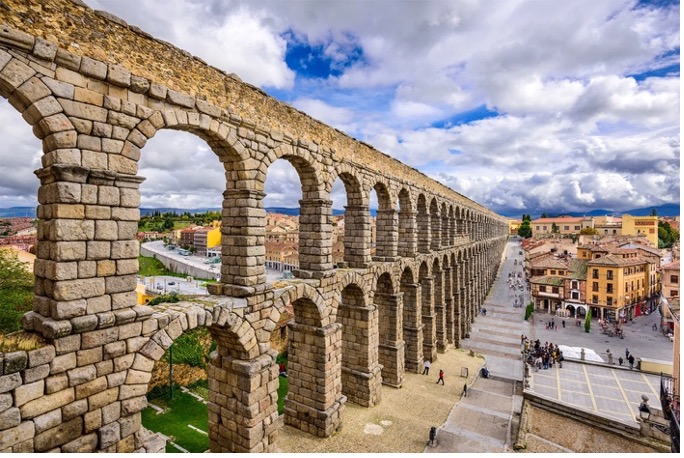
The Romans placed great emphasis on the long-distance transport of water from its source to the point of use. They developed a characteristically Roman form of this technology, the aqueduct, combining technological advances such as accurate surveying, the arch and sophisticated mortars. Aqueducts delivered fresh water to Roman towns and villas all over the Roman world to a degree unmatched until the modern period. Limestone deposits that formed in Rome’s aqueducts while they were flowing can tell us a lot about how they functioned and the climate and environment at the time. New scientific analyses reveal a very detailed rainfall distribution and the impact of the building of a dam on the Aniene River, upstream of the aqueduct intake.
Dr Duncan Keenan-Jones is a Lecturer in Classical Archaeology at the University of Manchester, with an honorary affiliation at the University of Queensland’s Centre for Policy Futures. His research brings together archaeology, ancient texts and environmental science to explore Roman water management, climate and how ancient societies shaped — and were shaped by — their landscapes
This talk takes place both in-person and online via Zoom
Trimontium Members, all talks are included as part of your membership. You will automatically be sent Zoom joining details as part of your membership 48 hours prior to the talk. If you wish to book an in-person place please reserve your spot through the booking form on this page.
Non members attending online will receive the joining details via email within 48 hours prior to the talk.